-

menu

menu
-

cv upload
cv upload
-

Timesheets
Timesheets
-

job search
menu
menu
cv upload
cv upload
Timesheets
Timesheets
job search

By
 David Pynor (15/07/2026)
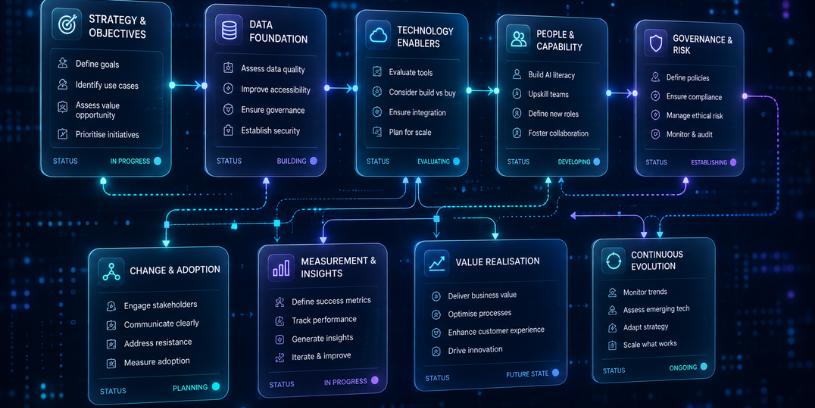
It's difficult to have a business conversation today without AI finding its way into the discussion.
It doesn't matter if I'm talking to a law firm in the US or a media company in the UK, the focus is not on whether to invest in AI - that’s a given - but where it can deliver the greatest value and what businesses need to have in place to make it work.
And these conversations usually lead back to the same themes: data, business processes and having the right people in place to turn investment into practical outcomes.
Data is usually the starting point when talking about introducing AI into the business.
Many businesses already have the information they need. Over the past decade they've invested in new systems, digitised processes and built substantial volumes of data. AI has placed even greater emphasis on how that data is managed because the quality of any output depends heavily on the quality of the information behind it.
When data is well managed and readily available, introducing new technology becomes a much more practical exercise. Teams trust the information they're working with, making it easier to identify where AI can genuinely add value.
A recent conversation with a client sums it up well. We started talking about AI, but before long we were discussing data quality, business processes and whether they had the right people and capability in place to deliver the programme.
Introducing AI often prompts leadership teams to look more closely at business processes, governance, skills and the way different teams work together. Successful programmes rely on input from people across the business, not just the technology teams responsible for implementing them.
Once businesses have a clearer picture of what they're trying to achieve, the next question is usually who they need to make it happen.
Data professionals help them make better use of the information they already have. Change and transformation specialists support the adoption of new ways of working. Innovation leaders identify opportunities to apply technology where it can have the greatest impact.
These disciplines have always been important. AI has simply brought them together more often within the same programmes and around the same business objectives.
One of the most interesting things I've noticed over the past year is that we're no longer talking about these disciplines in isolation.
AI projects bring together people from data, change and innovation much earlier in the process than they once did. Yes, organisations still need deep expertise, but they're also looking for people who understand how their work connects with the wider programme.
That's changing the way many firms, businesses and organisations across all the sectors I work in think about hiring.
Get in touch with me if you are exploring your career options or looking to hire in Innovation & AI, Data, Change & Transformation or Technology
Whether you want to talk through a hiring requirement or update us on your latest career move, we’d love to hear from you.
Call our London office on
+44 (0)20 7048 6970
Or visit us:
8 Gate Street,
London,
WC2A 3HP




 020 7048 6970